
Start with the personal-washing task
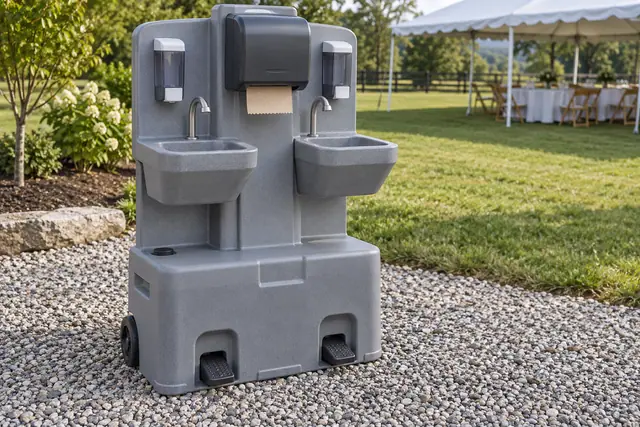
Explain who will use the station and when: a working crew, event visitors or another defined group. Ask about the actual basin operation, soap, drying provision and water arrangement. Do not assume a toilet’s hygiene dispenser is the same as a soap-and-water station, or that an ordinary personal-washing rental is designed for food preparation or cleaning tools.
Position the washing point for its intended users
Consider where people will approach and leave the station in relation to the activity and toilets. A convenient washing point should not force everyone into the same narrow queue or occupy another facility’s doorway. Have the responsible parties review the actual layout, including any access functions needed, without prescribing an improvised surface or connection.
Make replenishment and professional service explicit
Ask what supplies are included and how the offered equipment is maintained through the accepted period. For a busy programme, explain concentrated use rather than just a total visitor count. Keep ordinary observations and the reporting contact clear, but do not refill unfamiliar tanks, alter fittings or dispose of collected water through an unapproved route.
Include the station in delivery and collection instructions
The receiver should know which washing equipment accompanies the toilet arrangement and where it has been agreed to stand. When plans change, check that washing has not been omitted while the toilet order is revised. At the end of use, keep the actual equipment accessible for the provider’s agreed collection rather than putting it behind dismantled stalls or stored material.
Questions before you book
Should the washing station simply go wherever there is spare space beside a toilet?
No. Review how people will approach and use it, its actual functions and the delivery and service requirements of that position.